
EAN-13 barcode for a product: where to get a number and how to print it on packaging
A shop or a marketplace asks for a barcode. Where the digits come from, how EAN-13 differs from UPC and Code 128, and how to place the code so a till reads it first time.
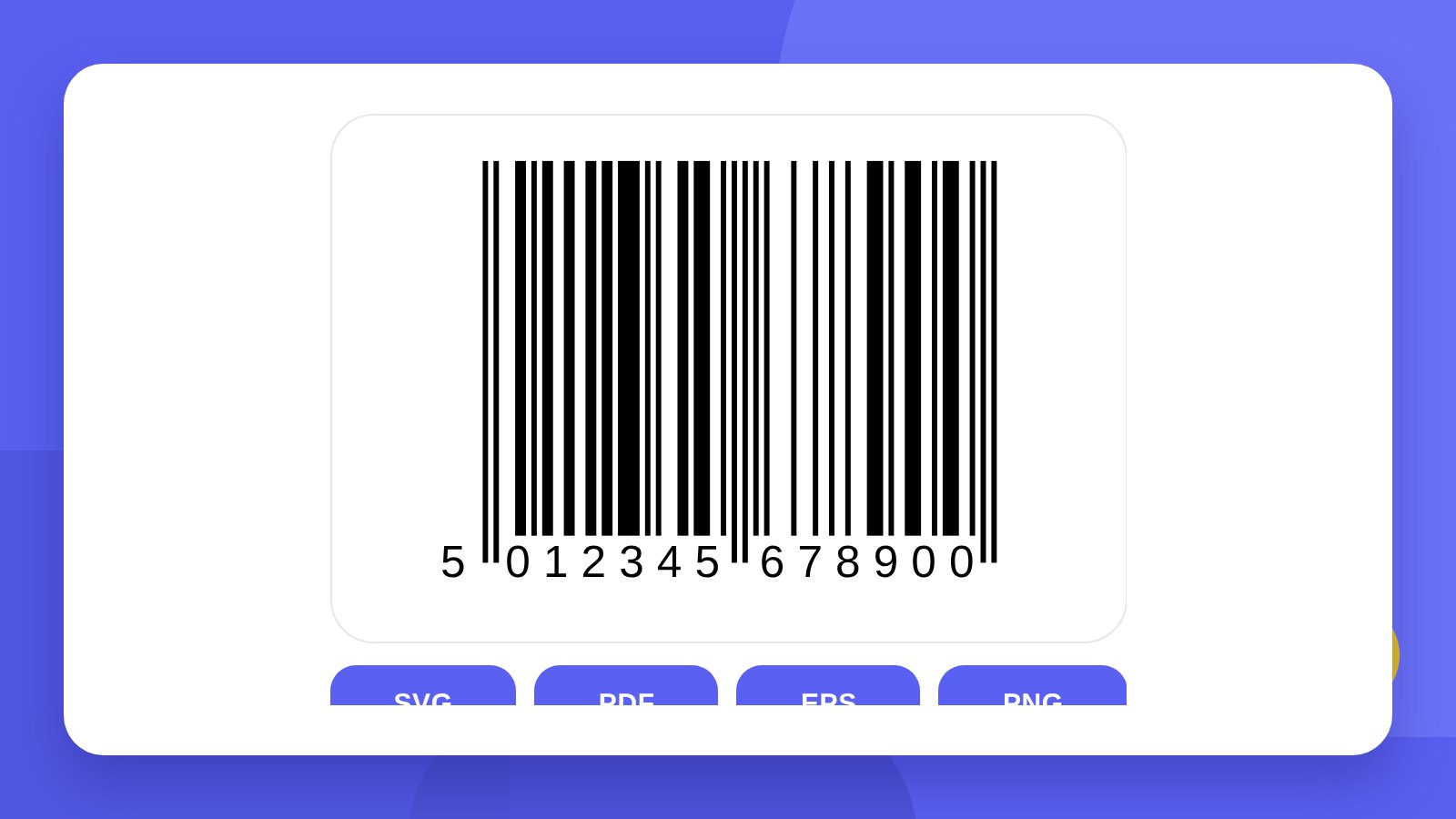
As soon as a product reaches a shop shelf or a large marketplace, the manufacturer is asked for a barcode. For the till it is the key to the product record: the name, the price, the stock level.
A barcode has two parts: the number and the pattern of bars. The number is obtained officially. The pattern for that number you can make yourself – what matters is that it is sharp and the right size.
- Numbers for retail are issued by the national GS1 organisation. You cannot generate them yourself.
- The barcode artwork for packaging must be vector: SVG, PDF or EPS.
- Dark bars on a light background, quiet zones at the sides and a scanner test before the run are a must.
BasicsWhat an EAN-13 consists of
| Digits | What they mean |
|---|---|
| The first two or three | The prefix of the GS1 organisation that issued the number |
| The next ones | The company number issued by GS1 |
| Then | The product number – assigned by the manufacturer |
| The last one | The check digit, calculated from the previous twelve |
The prefix shows where the number was issued, not where the product was made. The check digit protects against errors: if a digit is mistyped or two neighbouring digits are swapped, the scanner notices in most cases.
NumberWhere to get a barcode number
For retail chains and most marketplaces you need a number registered in the GS1 system. You get it from the GS1 organisation in your country: the company becomes a member, receives its own range of numbers and assigns them to products itself.
For internal use – a warehouse, your own shop, stock-taking – registration is not needed. Code 128 is the usual choice here: it can hold any item code with letters and digits.
Buying “ready-made numbers” from resellers is risky: a retailer may check who the code is registered to and refuse the goods.
How-toHow to make a barcode: 4 steps
- Open the toolGo to EAN-13 barcode in vector.
- Choose the type and enter the numberEAN-13, UPC-A, EAN-8 or Code 128. Enter 12 digits and the tool calculates the check digit; enter 13 and it verifies it.
- Check the sizeThe tool shows the size of the code including the light margins and the width of the narrowest bar.
- Download the fileSVG, PDF or EPS for packaging, PNG for a product listing. For a batch of codes there is a PDF sheet and an archive.
TypesEAN-13, UPC-A, EAN-8 and Code 128: which to choose
| Type | Where it is used | Feature |
|---|---|---|
| EAN-13 | Retail in Europe and most of the world | 13 digits, the main standard |
| UPC-A | The United States and Canada | 12 digits |
| EAN-8 | Very small packaging | 8 digits, a separate number from GS1 |
| Code 128 | Warehouse, logistics, internal use | Letters and digits, any length |
PrintWhat size to print a barcode
The nominal size of an EAN-13 is about 37 × 26 mm including the light margins. It can be reduced to about 80 % and enlarged to 200 %. A smaller code may not scan at the till.
Quiet zones. Empty space must remain to the left and right of the bars. Text, a frame or the edge of a label right against them gets in the scanner’s way.
Height. A code cut down heavily in height scans only at a certain angle. Do not make it shorter without need.
Vector. A PNG stretched in the layout gives blurred bar edges. Packaging takes SVG, PDF or EPS.
MistakesWhy a scanner does not read a barcode
Colours. A scanner sees red light. Red, orange and yellow bars are invisible to it, while dark blue, green and black are reliable. The background must be light: white, yellow, pale beige.
A fold or a seam. A code on the edge of a box, on a bag seam or across a round bottle reads poorly. Put it on a flat panel; on a bottle – as a “ladder”, with the bars across the height.
Gloss and clear film. Glare from lamination or the product showing through film confuses a scanner. A white panel is placed under the code.
Size. The code was shrunk “so it would not spoil the design”. Below 80 % there is no guarantee it will scan.
PackagingWhere to place the code on packaging
- Back or side panelNot on the base or the lid if a cashier has to turn the product over.
- Away from edgesAt least 8–10 mm from a fold, a seam and the edge of a label.
- One code per packageTwo different barcodes on one box confuse the till. An old code is covered.
- Space in the layout in advanceIf you are making a box dieline, leave a flat light area for the code from the start.
HonestlyThe tool draws the code. GS1 issues numbers, and we design the packaging
The tool makes the artwork for a number you already have and verifies the check digit. It does not register numbers and does not replace a test with a real scanner.
A barcode is only one of the mandatory elements of packaging, next to the ingredients, the labelling and the logo. Packaging in your brand style where all of it sits in its place is what we design: write to us.
Print the code at real size on an ordinary printer and take it to a scanner in the nearest shop, or read it with a phone app. It takes a minute and saves a print run.
FAQFAQ
Can I make up a barcode myself?
For your own warehouse, yes – for example in Code 128. For sale in retail chains you need a number obtained from GS1.
What do the first digits of the code mean?
They are the prefix of the GS1 organisation that issued the number. They do not indicate the country of manufacture.
How many digits do I enter?
For EAN-13 – 12 or 13. Enter 12 and the tool calculates the check digit itself.
Which format does a print shop need?
Vector: SVG, PDF or EPS. The bars stay sharp at any size.
Can a barcode be coloured?
Yes, if the bars are dark (black, dark blue, dark green) and the background is light. A scanner does not see red and yellow bars.
Can I make many codes at once?
Yes. Paste a list of numbers and the tool builds a PDF sheet and an archive with separate files.
We will design your logo and packaging in your brand style.
Make a barcodeDiscuss your packagingHigh quality
Years of experience let us take on projects of any complexity
Individual approach
Every client is unique. We create a unique concept for each of them
Professionals
Everyone on our team has extensive experience in advertising, development and design
Fast turnaround
Logo design takes 2–8 business days
GET IN TOUCH
Message us on Telegram, Instagram or by email – we reply quickly and gladly.